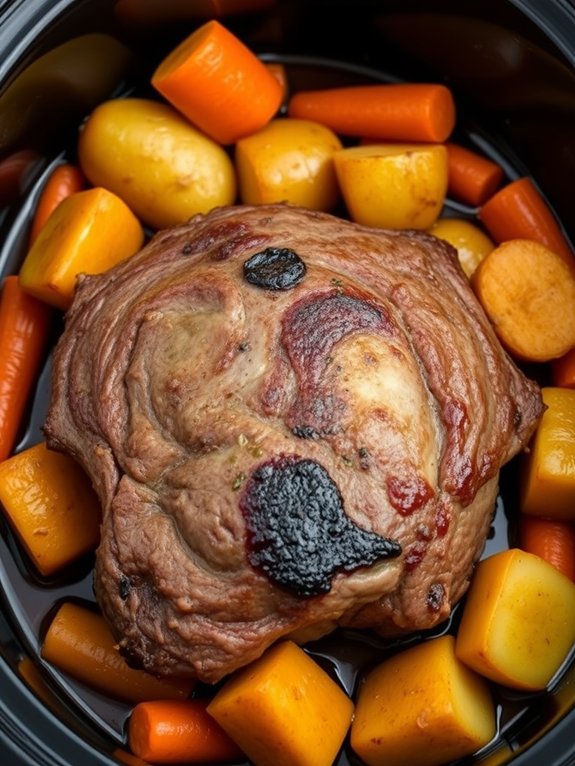

Beef Vegetable Soup
This post contains affiliate links. As an Amazon Associate, I earn from qualifying purchases, at no extra cost to you. Read my full disclosure.
Beef vegetable soup is the perfect bowl of comfort you crave! Start with tender chunks of beef, like chuck or brisket, and sear them for delicious flavor. Toss in colorful veggies—think carrots, potatoes, and peas—along with savory aromatics like onions and garlic. A rich broth pulls it all together, while seasonings like salt, pepper, and thyme elevate the taste to new heights! Let it simmer to meld every delightful flavor. This hearty dish is not just satisfying; it's packed with nutrients too! Curious about the best ways to serve it or some fun variations? There's so much more you can explore!
Recipe Highlights
- Select high-quality beef cuts, like chuck or brisket, for rich flavor and tenderness in your soup.
- Incorporate a variety of fresh vegetables such as carrots, potatoes, and green beans for nutrition and color.
- Sear the beef before simmering to enhance flavor through caramelization, then add aromatics like onions and garlic.
- Use beef broth or stock as a base to unify flavors, and season with salt, pepper, and paprika.
- Pair the soup with crusty bread and store leftovers in airtight containers for easy reheating.
Ingredients for Beef Vegetable Soup
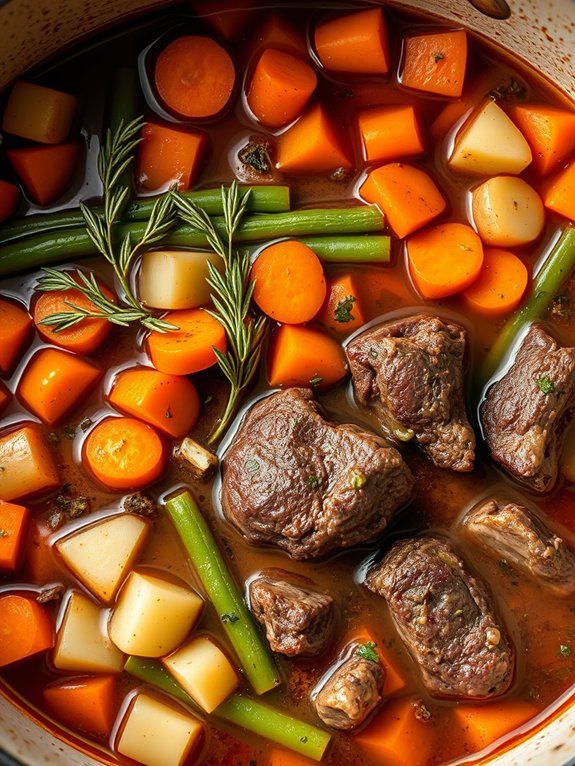
When you're ready to make a hearty Beef Vegetable Soup, gather these essential ingredients. First off, you'll need about a pound of beef, preferably chuck, cut into bite-sized pieces. This gives your soup that rich, meaty flavor everyone loves.
Next, grab a mix of fresh vegetables like carrots, potatoes, celery, and green beans. They'll add color and nutrition, making every spoonful a delight!
Don't forget about onions and garlic; they're key to building a deep, savory base. A couple of bay leaves and some fresh thyme can elevate your soup to the next level.
You'll also want to have beef broth or stock on hand, as it'll be the foundation of your soup, bringing everything together.
Lastly, seasonings are a must! Salt, pepper, and maybe a pinch of paprika will enhance the flavors beautifully. If you love a little kick, consider adding some crushed red pepper flakes.
Using a non-porous material for your cutting board can help maintain hygiene while prepping these ingredients.
With these ingredients, you're well on your way to creating a delicious Beef Vegetable Soup that warms both the heart and the soul. So, gather these goodies, and get ready for an unforgettable culinary adventure!
What You’ll Need
- Freezer-safe soup containers – freeze leftovers in single portions
- Instant-read meat thermometer – the easiest way to know meat is safely cooked
- Glass meal prep containers – store leftovers safely
Preparation Steps
Now that you've gathered all your ingredients, it's time to roll up your sleeves and start cooking!
First, you'll want to chop your vegetables—carrots, celery, and onions should all be diced into bite-sized pieces. This won't only make them easier to eat but also help them cook evenly.
Next, grab your beef and cut it into chunks. You want pieces that are hearty but not too big.
Once that's done, it's time to get everything prepped. If you're using fresh herbs, give them a rough chop to release their flavors.
Don't forget about your garlic! Mince it finely, as it'll add a wonderful aroma to your soup.
After everything's chopped, gather your stock or broth and any seasonings you plan to use. It's a good idea to measure them out ahead of time, so you can easily toss them in as you go. Additionally, having quality kitchen tools like poultry shears can make the cutting process more efficient and enjoyable.
Cooking Techniques
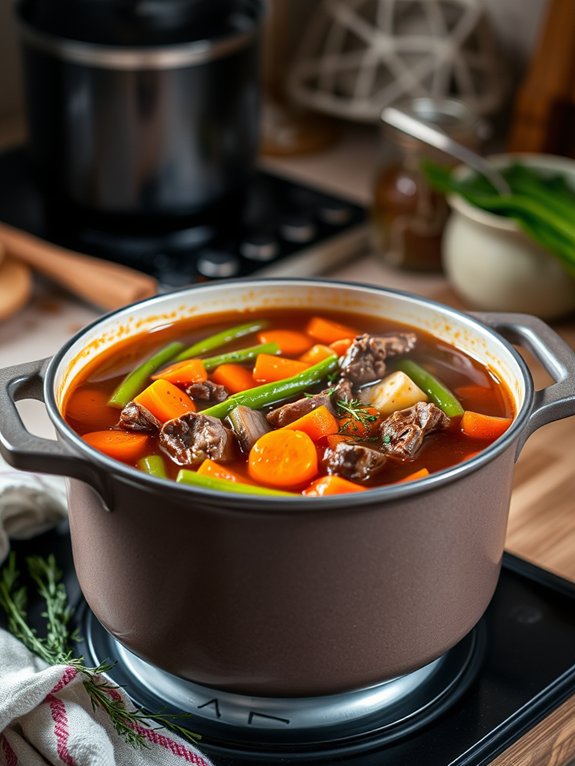
How do you guarantee your beef vegetable soup turns out flavorful and satisfying? It all comes down to mastering a few key cooking techniques. First, sear your beef to build an incredible depth of flavor. This caramelization is what gets your taste buds dancing! Next, sauté your aromatic vegetables like onions, garlic, and carrots in the same pot. This step enhances the soup's overall profile, making it irresistible. Additionally, using a cast iron skillet can improve the heat retention and distribution for optimal cooking results.
Here's a handy table to visualize the cooking techniques:
| Technique | Description |
|---|---|
| Searing | Brown the beef to enhance flavor |
| Sautéing | Cook aromatics for a flavorful base |
| Simmering | Slow cook to meld all the delicious flavors
Choosing the Right Beef
Selecting the right cut of beef can elevate your vegetable soup from good to great. When you're choosing beef, think about the flavor and texture you want to bring to the table. Cuts like chuck roast or brisket are fantastic choices. They're marbled with fat, which means they'll break down beautifully during cooking, resulting in tender, flavorful bites.
Don't shy away from using stew meat, either. It's usually a mix of various cuts, saving you time and money while still delivering that rich, beefy taste. Plus, it's perfect for slow cooking, allowing those flavors to meld together wonderfully.
If you're feeling adventurous, consider adding short ribs. They bring a deep, robust flavor that'll make your soup unforgettable. Just remember to trim any excess fat before tossing them in the pot!
Whatever cut you choose, make sure it's fresh. Look for vibrant color and a nice sheen, as these are signs of quality. Additionally, using cuts with good marbling can enhance the flavor and tenderness of your soup.
With the right beef, your vegetable soup will go from a simple meal to a heartwarming dish that friends and family can't resist. Jump in, choose wisely, and enjoy the delicious results!
Best Vegetables to Use
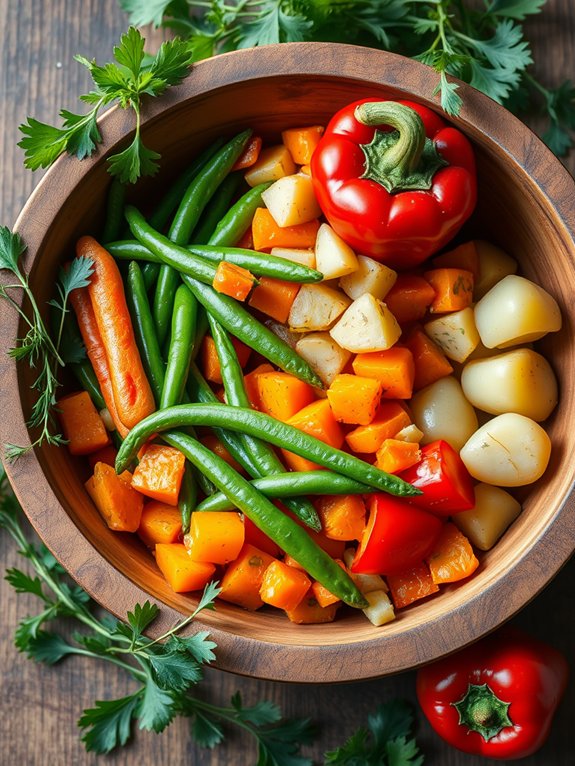
When it comes to crafting a hearty beef vegetable soup, the right combination of vegetables can make all the difference in flavor and texture. You'll want to include a variety of colorful veggies that not only taste amazing but also add visual appeal.
Start with classic choices like carrots and celery; they bring a touch of sweetness and crunch. Potatoes are a fantastic addition too, providing that comforting heartiness you crave.
Don't forget about onions and garlic! They create a flavor base that'll make your soup sing. For a pop of color and nutrients, add bell peppers and green beans. If you're feeling adventurous, throw in some corn or peas for a sweet burst.
And let's talk greens! Spinach or kale can elevate your soup's nutritional profile while adding a lovely green hue. Steaming these vegetables before adding them to your soup can enhance their nutrient retention and flavor.
Remember, you can mix and match based on what you love or what's in season. The beauty of beef vegetable soup lies in its versatility, so get creative! Each vegetable contributes its unique flavor, transforming your soup into a warm, inviting bowl of goodness that'll have everyone coming back for seconds.
Enjoy the process and savor every bite!
Flavor Enhancers
To elevate the flavors of your beef vegetable soup, consider incorporating a variety of flavor enhancers that will deepen the overall taste.
First up, don't underestimate the power of herbs and spices! Fresh thyme, rosemary, and bay leaves can transform your soup into a fragrant masterpiece. Just toss in a few sprigs while it simmers for a burst of flavor that'll have everyone asking for seconds.
Next, think about umami boosters. A splash of soy sauce or a spoonful of Worcestershire sauce adds a savory depth you simply can't resist.
And let's not forget about garlic and onions. Sautéing them before adding other ingredients creates a flavor base that's absolutely unbeatable.
For a bit of zing, consider a dash of hot sauce or a sprinkle of red pepper flakes. They'll wake up your taste buds and keep things exciting!
Finally, a drizzle of balsamic vinegar or a squeeze of lemon juice just before serving can brighten the flavors, making each spoonful a delightful experience. Additionally, using a meat thermometer to ensure your beef is cooked to the proper temperature can help elevate the quality of your soup even further.
With these simple additions, your beef vegetable soup will be anything but ordinary—your family and friends will be raving about every delicious drop!
Serving Suggestions
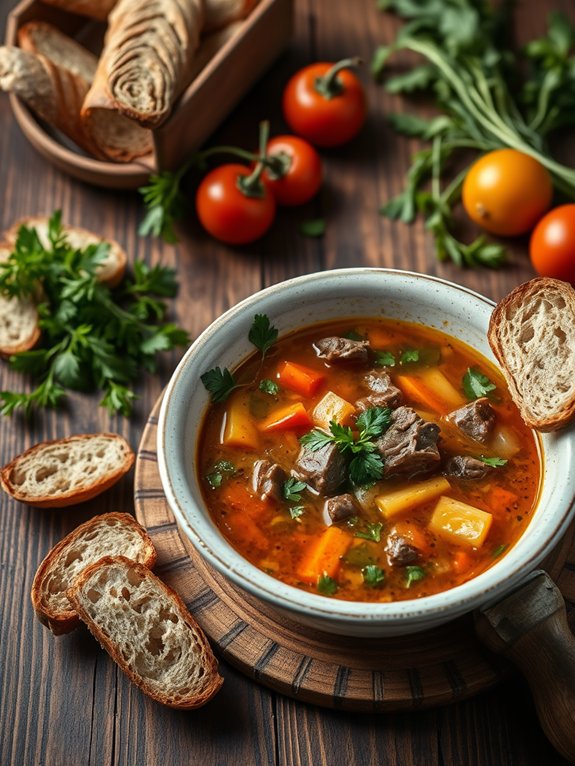
Serve your beef vegetable soup in warm bowls to enhance the dining experience, allowing the rich aroma to envelop your guests.
You'll want to garnish each bowl with freshly chopped parsley or a sprinkle of grated Parmesan cheese for that extra touch of flavor and color. The vibrant greens and creamy whites won't only look appealing but will also add depth to your soup.
Pair your soup with crusty bread or warm dinner rolls. There's nothing quite like dipping that bread into the savory broth, soaking up every delicious drop. Trust me, your guests will thank you for it!
For an added zing, consider serving a side of tangy pickles or a fresh garden salad to balance the heartiness of the soup. Their crisp textures and bright flavors will create a delightful contrast that keeps everyone coming back for more.
And don't forget about drinks! A glass of robust red wine or a rejuvenating iced tea complements the flavors beautifully. Additionally, using a high-performance stainless steel roasting pan can enhance your cooking efficiency and ensure even heat distribution for perfectly cooked beef.
As you gather around the table, share stories and laughter while enjoying this comforting dish together. It's all about creating a cozy atmosphere that warms both the heart and the soul!
Storage Tips
Properly storing your beef vegetable soup can extend its freshness and flavor for up to three days in the refrigerator. To keep your soup tasting its best, follow these simple storage tips.
First, let your soup cool down to room temperature before putting it in the fridge. This helps prevent condensation and keeps your soup from becoming watery.
Next, consider using airtight containers; they keep your soup safe from unwanted odors and contamination.
Here are a few tips to make storage a breeze:
- Portion it out: Divide your soup into smaller containers for easy reheating and to help maintain freshness.
- Label and date: Use masking tape or sticky notes to mark each container with the date you made the soup, so you know when it's time to enjoy it or toss it!
- Freeze for later: If you can't finish the soup within three days, freeze it in freezer-safe containers for up to three months. Just thaw it in the fridge overnight before reheating. Ensure you choose BPA-free materials for safe food storage.
With these handy tips, you can savor the deliciousness of your beef vegetable soup every day! Enjoy the flavors without worry!
Nutritional Benefits
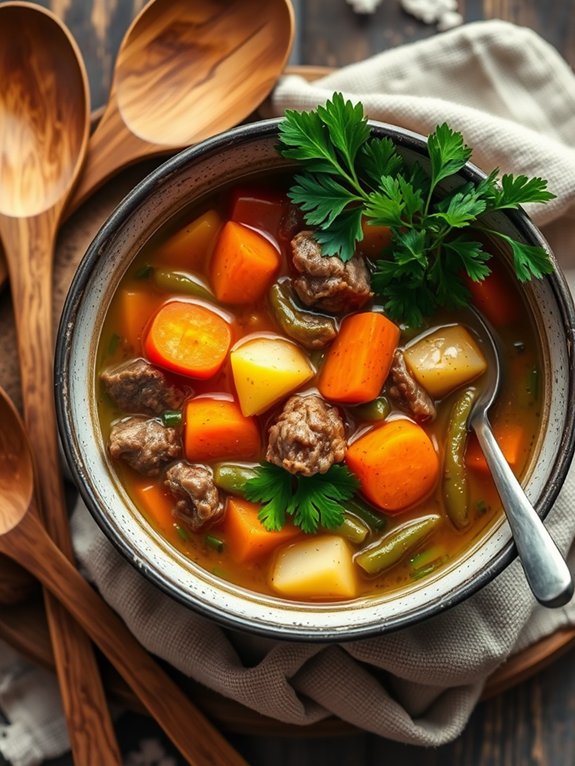
When it comes to nourishing meals, beef vegetable soup packs a powerful punch of nutritional benefits. This hearty dish is a delightful way to boost your health while satisfying your taste buds.
First off, it's loaded with protein from the beef, which helps build and repair muscles, keeping you strong and energized.
But that's not all! The colorful vegetables like carrots, peas, and tomatoes bring a treasure trove of vitamins and minerals to the table. You're getting vitamin A for your eyesight, vitamin C to support your immune system, and fiber to aid digestion.
Plus, the variety of veggies means you're enjoying a range of antioxidants, which fight off those pesky free radicals in your body.
What's more, this soup is a fantastic way to stay hydrated, especially on chilly days. As you sip that warm bowl, you're not just filling your belly; you're nourishing your body. Additionally, cooking your soup in high-quality stainless steel cookware ensures even heat distribution, enhancing the overall flavor and texture of your dish.
So, whether you're looking to warm up or simply enjoy a comforting meal, beef vegetable soup is a delicious and nutritious choice that keeps you feeling great.
It's a win-win, and you'll definitely want to keep this recipe in your meal rotation!
Variations of the Recipe
Beef vegetable soup is incredibly versatile, allowing you to customize it to suit your tastes or what you have on hand.
Whether you're feeling adventurous or just want to clean out your fridge, this soup is your canvas! You can easily swap ingredients or add flavors that excite your palate. Here are a few variations to inspire you:
- Spicy Kick: Toss in some diced jalapeños or a dash of hot sauce for a fiery twist.
- Herb Garden: Experiment with fresh herbs like thyme and rosemary, giving your soup a delightful aroma and depth.
- Global Flavors: Add soy sauce and ginger for an Asian flair, or throw in some cumin and cilantro for a Latin-inspired version.
The beauty of beef vegetable soup lies in its adaptability.
You can use different cuts of beef, switch up your veggies, or even play around with the broth. You'll find that each variation can transform a simple bowl of soup into a cozy meal that feels completely new.
Frequently Asked Questions
Can I Use Leftover Beef for the Soup?
Absolutely, you can use leftover beef for your soup!
It's a fantastic way to reduce waste and add incredible flavor. Just chop up that beef into bite-sized pieces, toss it in, and let it mingle with the veggies and broth.
The beauty of soup is that it's forgiving and versatile; you can adjust the seasoning to your taste.
How Long Does Beef Vegetable Soup Last in the Fridge?
If you've got a pot of deliciousness sitting in your fridge, you're in for a treat!
Beef vegetable soup can last about three to four days when stored properly in an airtight container. Just imagine those flavors mingling, getting even better with time!
But hey, don't let it linger too long—after four days, it's time to say goodbye.
Always give it a sniff before diving in, just to be safe! Enjoy every spoonful!
Is It Safe to Freeze Beef Vegetable Soup?
Absolutely, you can freeze beef vegetable soup! Just let it cool down first, then pour it into airtight containers or freezer bags.
Make sure to leave some space for expansion, though. It'll stay fresh for about three to four months!
When you're ready to enjoy it again, simply thaw it in the fridge overnight and reheat.
Trust me, there's nothing like a warm bowl of soup on a chilly day! Enjoy every spoonful!
Can I Make Beef Vegetable Soup in a Slow Cooker?
Absolutely, you can make soup in a slow cooker! Just toss in your favorite ingredients—veggies, meats, and spices—set it to low, and let it simmer all day.
You'll come home to a delicious aroma that'll make your mouth water! Plus, it's super easy to throw everything in and walk away.
Who doesn't love a hearty meal with minimal effort? So, grab your slow cooker and get ready for some cozy cooking!
What Are Some Common Mistakes to Avoid When Making This Soup?
When making soup, you might overlook a few key details! First, don't skip sautéing your veggies; it deepens the flavor.
Also, be cautious with salt—taste as you go, so you don't overdo it!
Using fresh herbs? Add them toward the end for a burst of flavor.
Finally, avoid overcooking; you want those veggies tender, not mushy.
Keep these tips in mind, and you'll create a delicious bowl of joy!